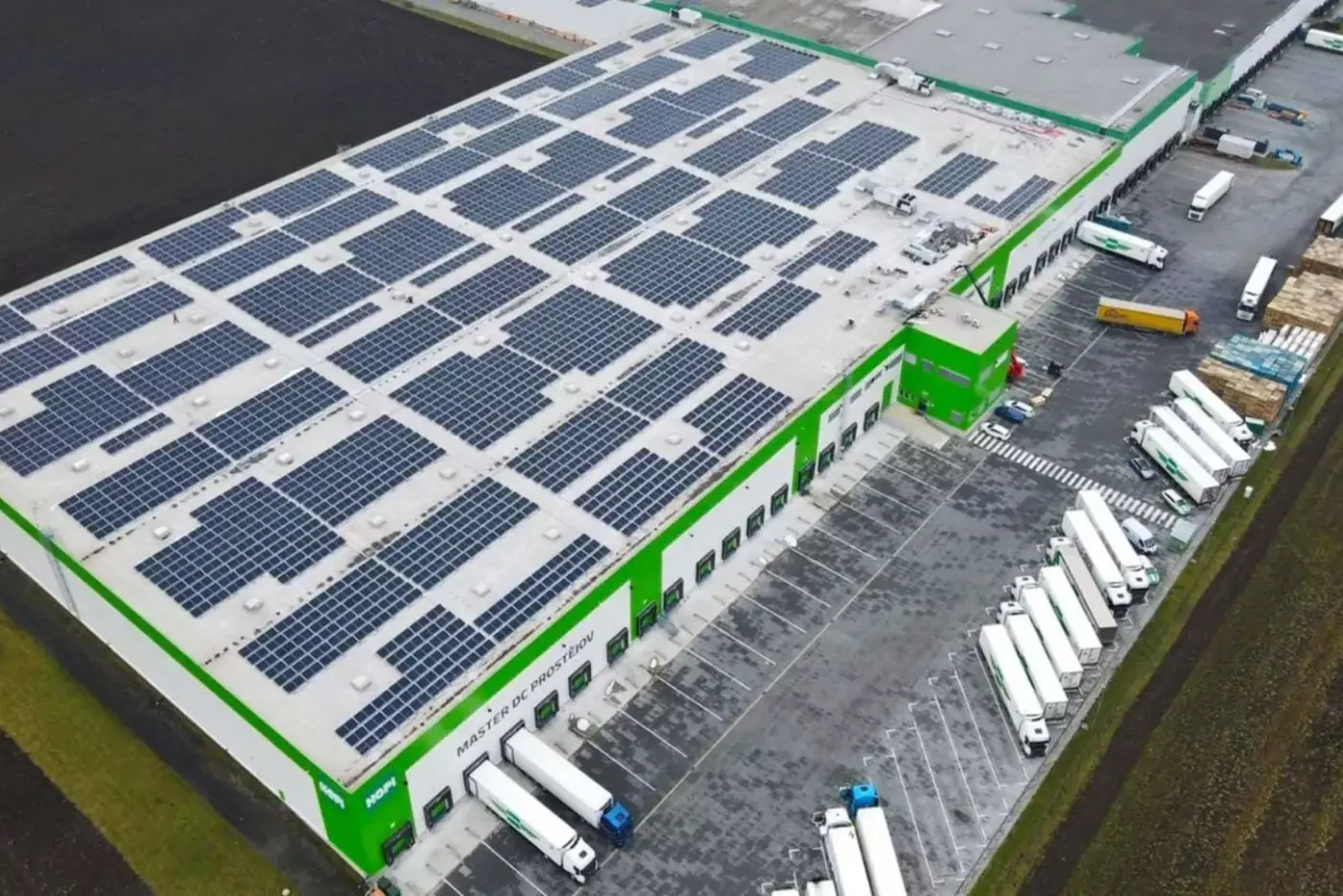
Logistics, production of yoghurts and other food, large-capacity freezing and chilling, ready meal preparation. All of it sits under HOPI holding. The company consumes 5 GWh of electricity a year, plus other types of energy.
Why measure at all
HOPI decided on a significant step: an audit of its energy management and the deployment of Enmon. The tool monitors energy flows, and its data makes it possible to propose savings measures. The reason is not only higher efficiency and staying competitive, but also the need to supply data for customers’ non-financial reporting.
"If I consume 100 of something at the input, I need to know where those 100 break down. And there is no way to do that other than by measuring."
How the measuring works
Sensors are installed on individual metering points, electrical, gas and water alike. They map energy flows at any moment and the data from different places comes together in one place. What becomes visible is how consumption develops with the seasons, with production load, and where anomalies and failures appear.
“Efficient energy management is key in our logistics. It is a responsible approach to operations and to sustainability. Thanks to Enmon we get a detailed overview of what is happening in our warehouses and production plants, which will let us optimise consumption and contribute to overall efficiency,” said Tomáš Neruda.
Own generation, storage and an electric truck
HOPI is an example of how to use modern energy technology and renewables. Individual parts of the company have been generating solar electricity since 2016 and today it covers roughly 30 percent of their consumption.
Its freezing and chilling equipment uses some of the most advanced technology in the Czech Republic, which limits energy losses. The company uses battery storage, has added an electric truck to its fleet and provides balancing services on top of that. Further energy projects are in preparation.
"The energy transition brings us enormous opportunities to make production plants and whole sites run more efficiently. As the number of components grows, as energy becomes decentralised and we are no longer only consumers of electricity but also its producers, the importance of monitoring has grown fundamentally. What we do not measure, we do not manage."
The full conversation with Tomáš Neruda
In the fifteenth episode of the PKV talk podcast, Tomáš Neruda and Ondřej Vaněk discuss why HOPI does not want to merely save on energy, but to earn on it. The recording is in Czech.